

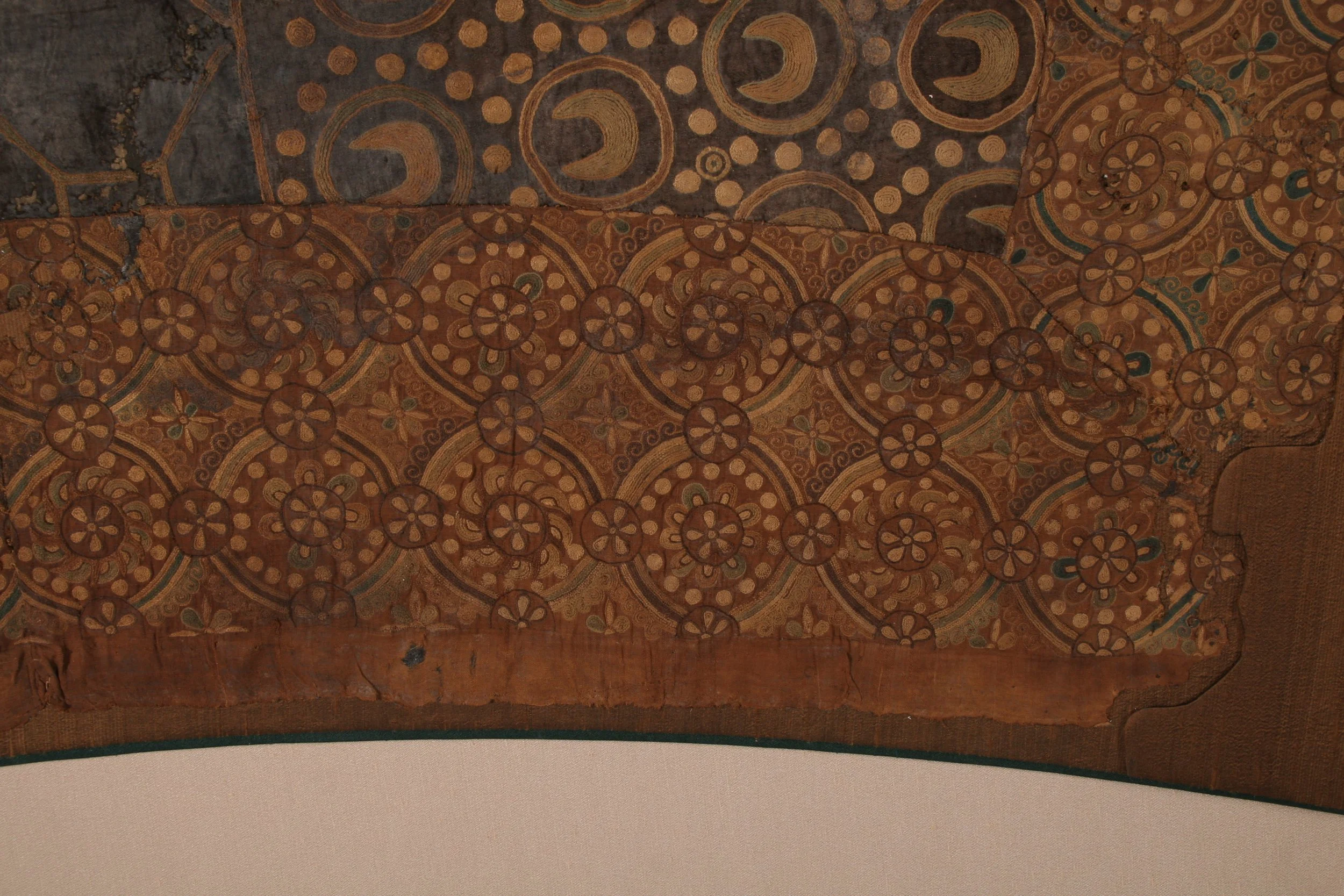
Framed Decorative Saddle Blanket
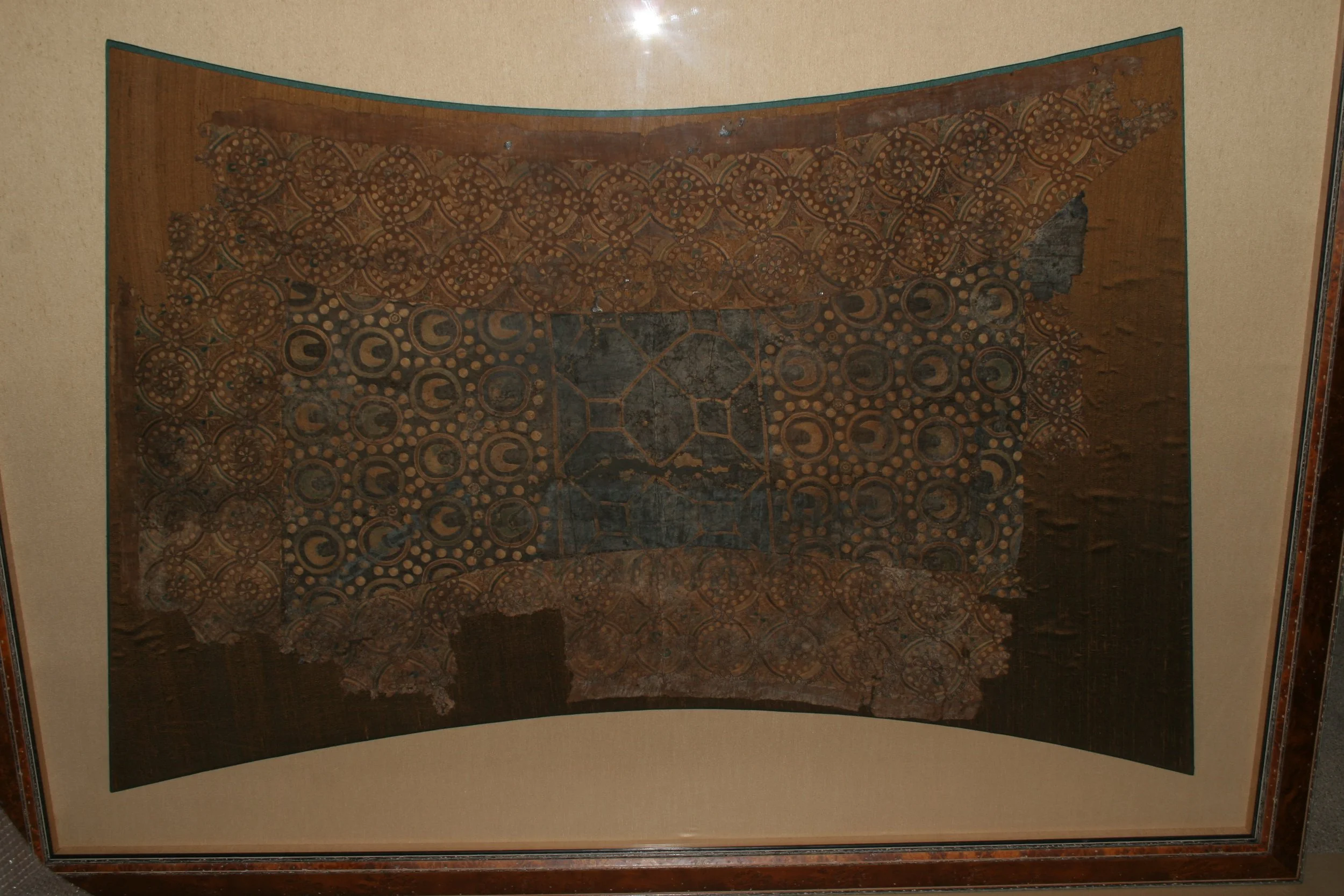
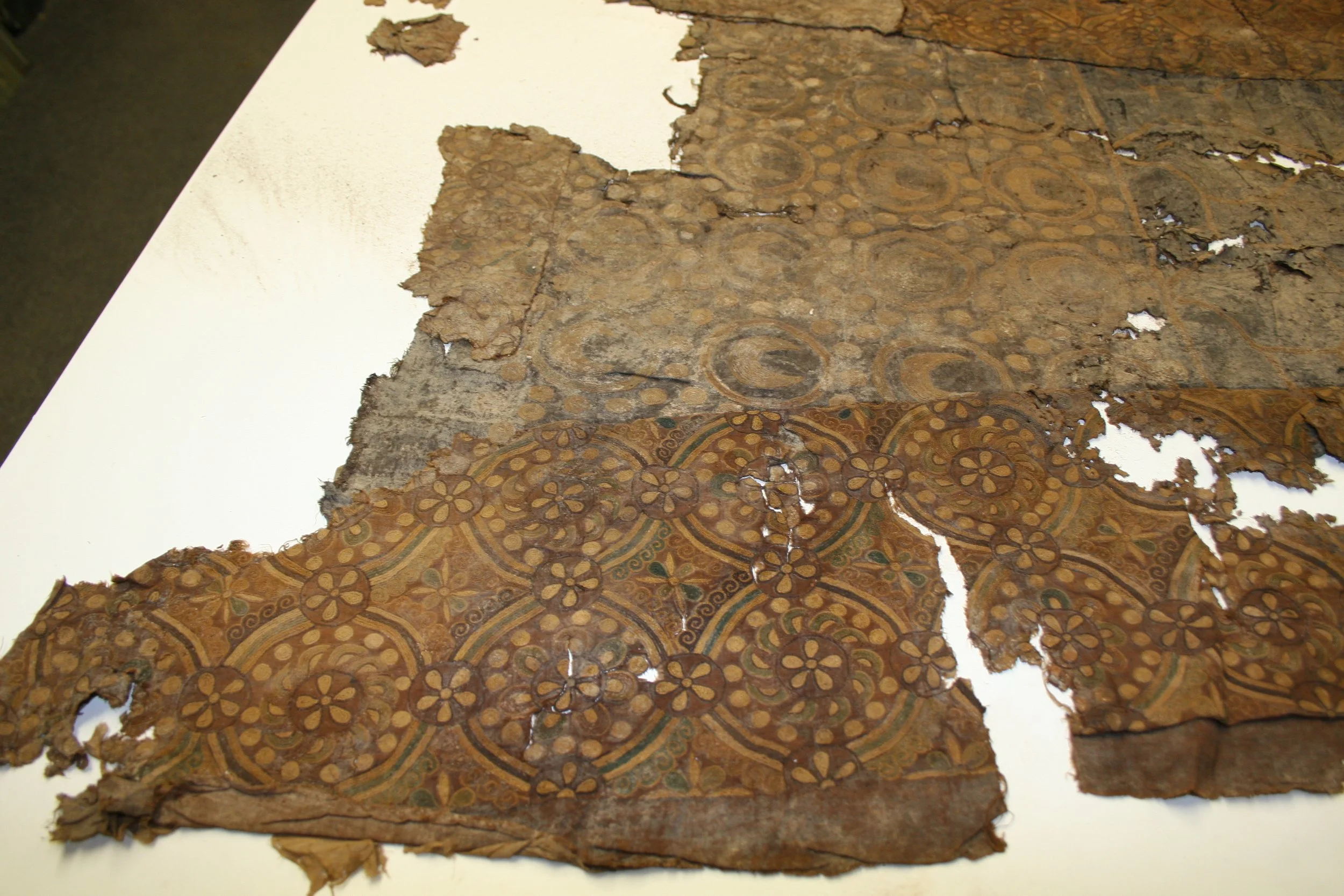
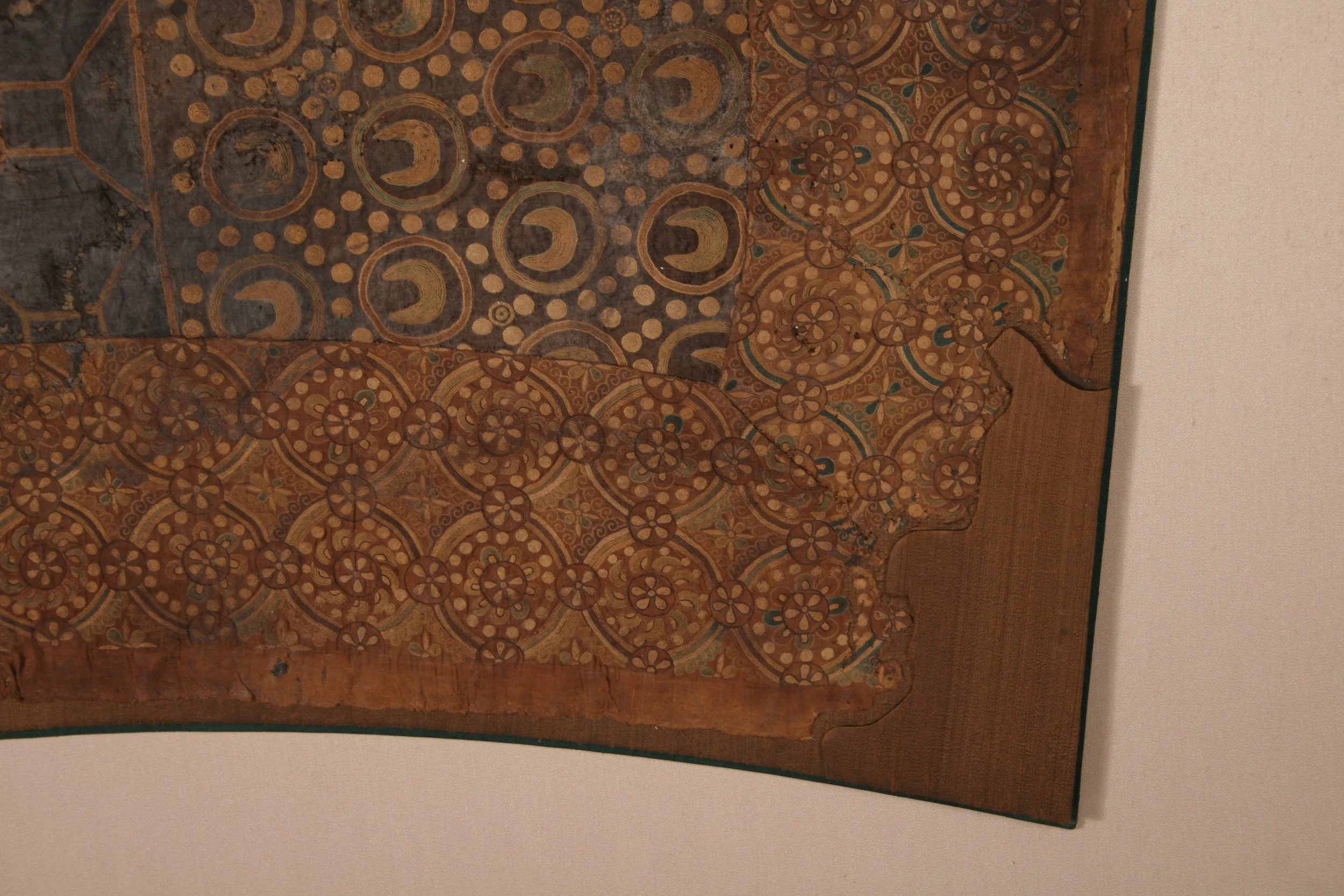
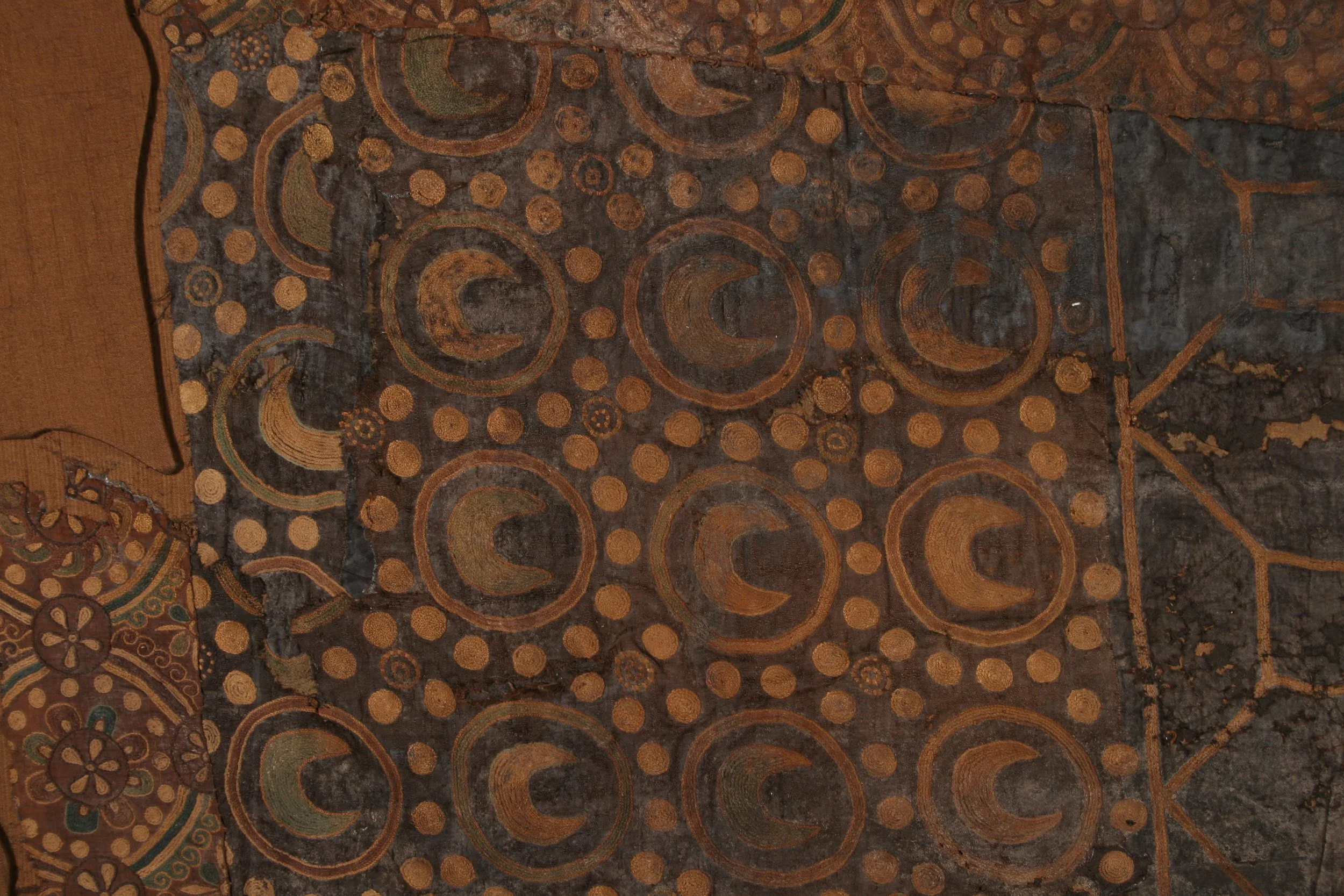
Among the many equestrian ornamental accouterments in ancient Eurasia was a decorative blanket or cloth that covered the saddle. Tang Dynasty pottery horse statues often depict these cloths hanging in sweeping folds down the sides of the animal. There are almost no other known examples in existence, this particular piece required half a year of restorative work. Lavishly embroidered with pearl rondelles and crescent-moon motifs, the imagery is associated with both Islamic and pre-Islamic cultures, particularly the Sassanid Empire, which once encompassed modern-day Iran. Radiocarbon analysis of the saddle cloth confirmed the age to be between 560 and 660 CE, during the height of the Sassanian Empire. Its creation coincides with the life of the prophet Muhammad (ca. 570-632), upon whose teachings the Islamic faith is based.
#3220
Date: 6th – 7th century CE
Medium: Textile
Subject: Saddle Blanket
Size: 53 ½” W x 73 ½” H
Radiocarbon analysis
Framed Decorative Saddle Blanket
Among the many equestrian ornamental accouterments in ancient Eurasia was a decorative blanket or cloth that covered the saddle. Tang Dynasty pottery horse statues often depict these cloths hanging in sweeping folds down the sides of the animal. There are almost no other known examples in existence, this particular piece required half a year of restorative work. Lavishly embroidered with pearl rondelles and crescent-moon motifs, the imagery is associated with both Islamic and pre-Islamic cultures, particularly the Sassanid Empire, which once encompassed modern-day Iran. Radiocarbon analysis of the saddle cloth confirmed the age to be between 560 and 660 CE, during the height of the Sassanian Empire. Its creation coincides with the life of the prophet Muhammad (ca. 570-632), upon whose teachings the Islamic faith is based.
#3220
Date: 6th – 7th century CE
Medium: Textile
Subject: Saddle Blanket
Size: 53 ½” W x 73 ½” H
Radiocarbon analysis